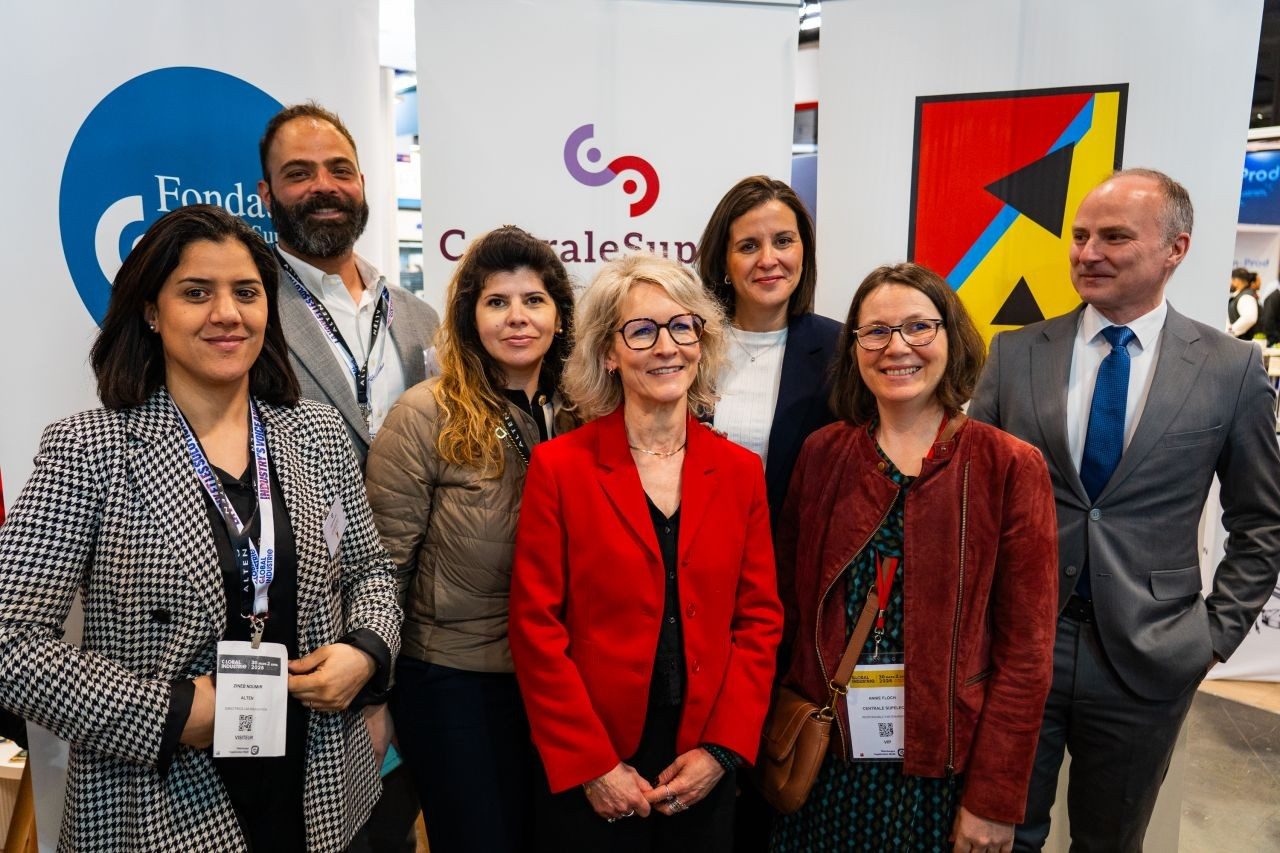


ALTEN, a global leader in engineering and IT services, and CentraleSupélec, a leading French engineering school specializing in science and engineering and a founding member of Paris-Saclay University, announce the signing of a chair agreement focused on trustworthy artificial intelligence.
Entitled “Trustworthy Multi-Agent Systems for Critical Industries,” this research and teaching chair will help lay the scientific and methodological foundations necessary for the deployment of explainable, sovereign, and robust artificial intelligence in industrial environments with high safety stakes, such as energy, transportation, manufacturing, and defense.
As the chairholder, Wassila Ouerdane, a professor of computer science at CentraleSupélec and a member of the MICS laboratory (Mathematics and Computer Science for System Complexity), will coordinate and oversee the public-private research collaborations that will be established. A first scientific kickoff conference is being planned for fall 2026.
Initially established for a term of three years, the chair is supported by the CentraleSupélec Foundation. It enriches and expands the partnership between ALTEN and CentraleSupélec that has been in place for many years, including, for nearly five years, collaborations in the areas of education—specifically within the engineering curriculum—and research in the form of theses. It establishes a true continuum of training, research, and innovation shared by both partners and will help intensify research in areas of mutual strategic interest, including those related to digital sovereignty and the resilience of France’s critical and industrial systems.
As such, the chair will support ALTEN’s research on the implementation of critical multi-agent systems. The scientific results obtained will be widely published and disseminated to make them available to the entire ecosystem of industry professionals, scientists, and students involved in the development of these systems.
The chair aims to gradually open up to industrial partners in the relevant sectors—manufacturing, energy, transportation, and defense—who wish to accelerate the adoption of multi-agent systems for use in critical contexts, while drawing on a shared scientific approach to build confidence in these systems.